Pre-emptive Kidney Transplantation
When transplantation can come before dialysis
1. What is pre-emptive kidney transplantation?
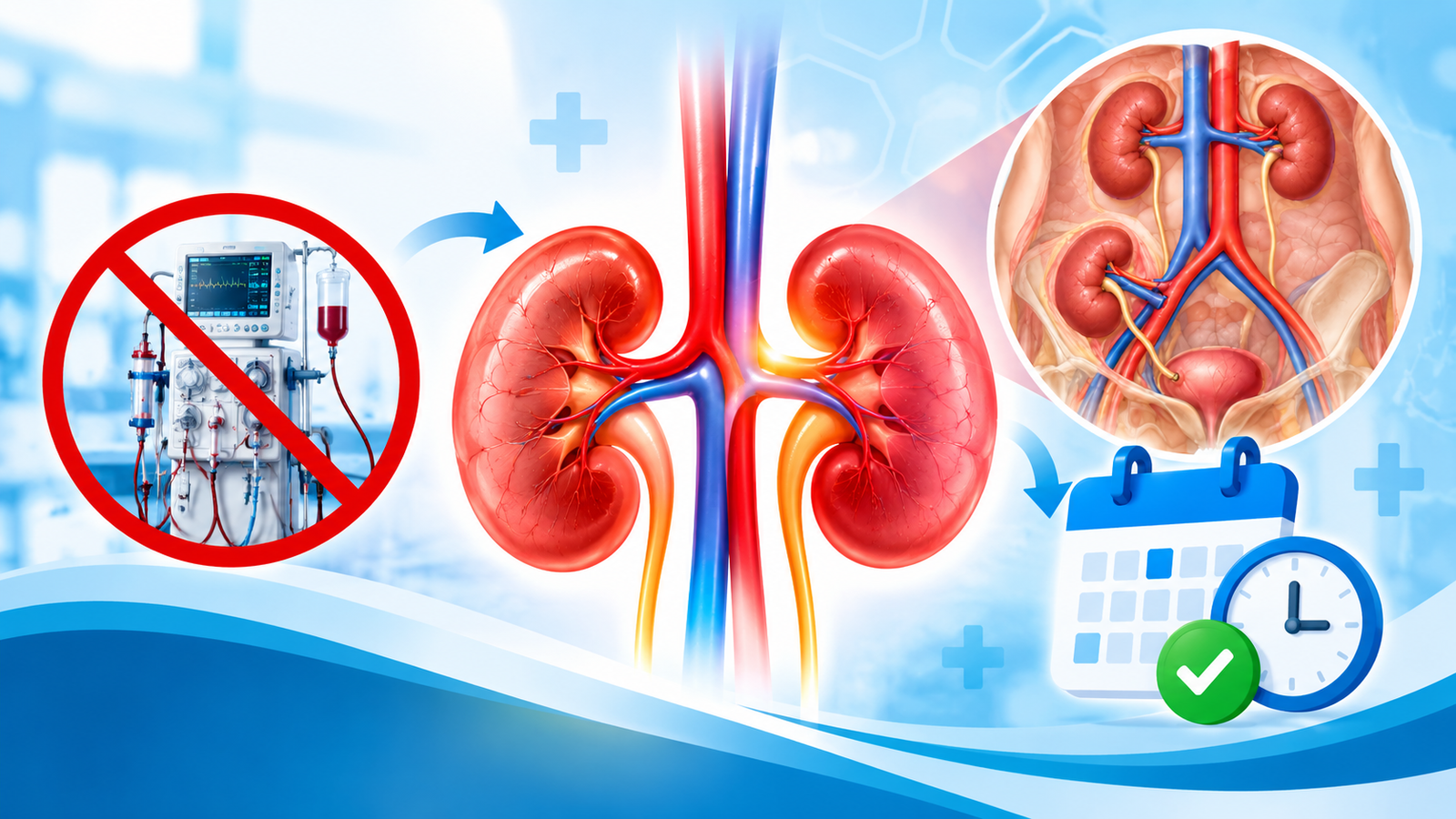
Pre-emptive kidney transplantation means receiving a kidney transplant before starting dialysis. It is considered when kidney function is progressively declining and transplantation is expected to be needed.
Instead of starting dialysis first and then waiting for a transplant, a suitable patient may be able to proceed directly to transplantation.
2. Why choose pre-emptive transplantation?
If transplantation is likely to be the long-term treatment, avoiding dialysis can spare patients the physical, emotional and lifestyle challenges associated with dialysis.
It also provides an opportunity to undergo transplantation while the patient is still in relatively good overall health.
3. What are the benefits of avoiding dialysis?
Avoiding dialysis means avoiding regular dialysis sessions and the need for dialysis access, while reducing exposure to dialysis-related complications.
It can also provide greater freedom for work, travel, family life and everyday activities.
4. Is pre-emptive transplantation suitable for everyone?
Not everyone is a candidate. The decision depends on the patient's kidney disease, overall health, rate of kidney function decline, transplant suitability and availability of a suitable donor.
Early evaluation is important because transplant assessment and donor evaluation take time.
5. Can a living donor make pre-emptive transplantation easier?
Yes. When a suitable living donor is available, the donor and recipient can be evaluated together and the transplant can often be planned in advance.
This allows transplantation to be performed electively, before dialysis becomes necessary, when medically appropriate.
6. When should I discuss transplantation with my nephrologist?
Do not wait until dialysis becomes unavoidable.
If your kidney function is progressively declining, discuss transplantation early with your nephrologist and transplant team. Early planning gives you time to understand your options, complete the necessary evaluation and consider whether pre-emptive transplantation is right for you.
The goal is not simply to start dialysis on time.
The goal is to choose the best treatment pathway for your future.